
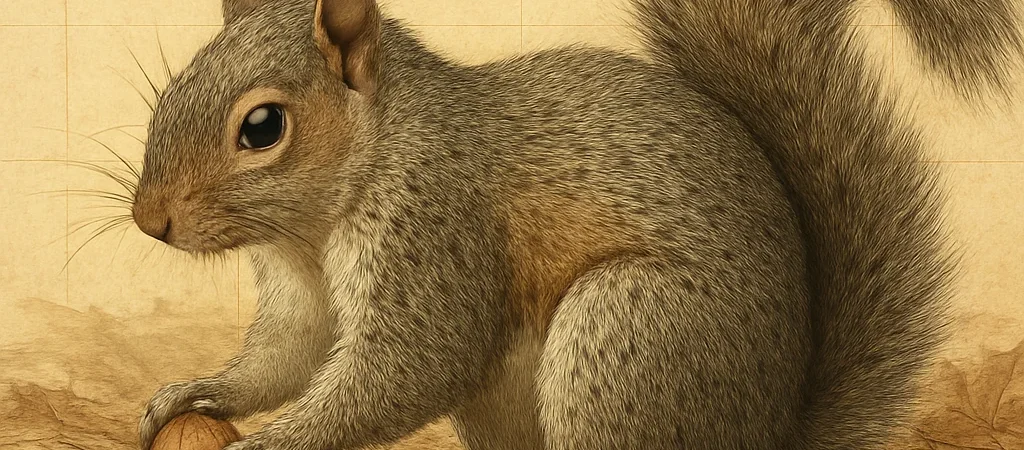
Long before computer engineers developed indexed database structures, the Eastern gray squirrel perfected a distributed storage network across acres of hardwood forest. Each autumn, a single squirrel buries thousands of acorns, walnuts, and beech seeds in individual shallow pits. Remembering the location of every item requires more than raw memory; it demands a structured system of spatial chunking and cache optimization. By examining how these small mammals categorize and locate hidden stores, we discover foundational principles that govern modern data management.
Spatial Chunking and Forest Indexing
Rather than depositing seeds at random, squirrels group their hidden reserves by traits such as species, size, and perishable lifespan. Biologists refer to this behavior as spatial chunking, a method where items are mapped to specific subterranean sectors based on their attributes. This spatial taxonomy mirrors database indexing, where large datasets are sorted into discrete partitions to speed up retrieval times. When winter arrives, the squirrel does not search the entire forest floor; it targets specific index regions based on current dietary needs.
Spatial Memory Across Complex Environments
Navigating a dynamic landscape of fallen leaves and changing seasons requires constant recalculation of reference points. Squirrels utilize visual landmarks like dominant tree trunks, distinctive rock clusters, and canopy openings as anchor coordinates. This reliance on environmental anchors reflects spatial memory models used in robotic mapping and localized positional tracking. Through visual triangulation, the animal maintains a resilient relational map that withstands seasonal changes in foliage.
Understanding natural cache optimization reminds us that software design often reflects solutions perfected by biology. By framing storage problems through field guide logic, students can trace the direct connection between forest survival strategies and digital architecture. The next time you spot an acorn buried near an oak tree, remember that you are observing a living demonstration of indexed data storage.